Sex-Positivity in Business: It’s Not About Sex
Sex-positivity in business is not about explicit content. It is a values-based lens for building trust through inclusivity, consent, openness, empowerment, and human experience.


When people first hear the phrase sex-positivity in business, it can create a moment of friction.
For some, it sounds provocative. For others, it may sound like it belongs only in adult industries, sexual wellness, dating, or relationship education. And for many business audiences, the word “sex” may appear before the deeper meaning has time to arrive.
That reaction is understandable. But in the context of Adonelle, sex-positivity is not about explicit content, provocation, or turning business into something sexual. It is about values.
At its core, sex-positivity offers a language for trust, respect, autonomy, inclusion, openness, pleasure, boundaries, and human agency. These are not only intimate values. They are also organisational values. They shape how people lead, communicate, design, sell, collaborate, and build brands.
In that sense, sex-positivity in business is not really about sex. It’s about the values that make business, and life, feel better.
What Sex-Positivity Means Here
Sex-positivity is often associated with sexuality, relationships, sexual health, pleasure, and diverse forms of human expression. In academic and social-movement contexts, it points toward a more ethical, respectful, inclusive, and non-shaming approach to sexuality and human relationships. It embraces sexuality as a natural part of life and places importance on consent, autonomy, communication, pleasure, safety, diversity, and respect.
Across both practice and literature, sex-positivity is often grounded in several guiding principles:
Acceptance and inclusivity
Every identity, body, desire, and experience deserves space and respect.
Respect and consent
Boundaries are the foundation of safety and trust. Choice must be respected.
Open communication and honesty
Dialogue reduces shame and helps create healthier, more transparent relationships.
Empowerment and self-discovery
People thrive when they are supported to understand themselves, explore their desires, and make confident, informed choices.
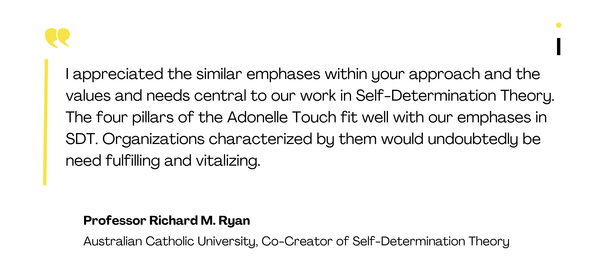
For business and organisational practice, Adonelle Touch translates these ethical and emotional foundations of sex-positivity into four practical pillars: Inclusivity, Consent, Openness, and Empowerment. It is not a move away from sex-positivity, but a way of carrying these values into the places where people work, lead, communicate, build brands, serve customers, and experience organisations.
These values matter in relationships, but they also matter wherever people gather, collaborate, lead, serve, communicate, and create value.
Sex-positivity is not a label a company must adopt as its public identity. It is a values-based lens. A company does not need to call itself “sex-positive” to benefit from deeper honesty, clearer boundaries, better consent, more inclusive communication, and more empowering experiences.
This distinction matters because many organisations may recognise the values, even if the term itself feels unfamiliar or difficult to relate to.
Bringing sex-positive values into a business context creates space for language that organisations often need but rarely use directly. The discomfort around the word “sex” often reveals something important: business language is comfortable with “hard” topics such as performance, optimisation, conversion, efficiency, and scale. It is often less comfortable with so-called “soft” topics such as trust, pleasure, safety, boundaries, vulnerability, and agency, even though these are often the conditions that make performance possible.
And those conditions are not abstract. They shape how people experience an organisation. Organisations do not build trust with people only through what they say. They build trust through what people experience.
Why This Matters for Modern Branding
Modern branding is no longer only about visibility, consistency, or differentiation. Those things still matter, but they are not enough.
People increasingly ask deeper questions, whether consciously or not:
Do I feel respected?
Is this brand being honest with me?
Am I being pressured or invited?
Do I really understand what I am agreeing to?
Do I feel seen?
Do I feel manipulated?
Does this company make me feel more capable, or less?
These are not soft questions, because they shape our behaviour. A brand that looks good but feels manipulative creates tension. A brand that speaks about values but hides important information creates distrust. A brand that claims inclusivity but designs for only one type of person creates distance. A brand that pushes urgency, shame, or confusion may get short-term action, but often weakens long-term trust.
Sex-positive values offer branding a different lens. They ask brands to move from pressure toward invitation, from image toward integrity, from control toward agency, and from performance alone toward felt trust.
This does not mean brands should become timid. It also does not mean that marketing should lose desire, energy, or ambition. Quite the opposite. It means the desire created by the brand should not depend on manipulation. It should come from resonance, clarity, relevance, and trust.
A strong brand does not only attract attention. It creates a relationship people feel good entering.
What Brands Can Learn from Sex-Positivity
Sex-positive values may seem unexpected in a business context, but they have been shaped in some of the most complex areas of human identity, vulnerability, shame, self-expression, and belonging. That makes them more than surface-level ideals. They are values that have helped people move from silence, stigma, and guilt toward acceptance, agency, and more honest communication.
Sex-positive spaces, at their best, have spent years developing language around consent, boundaries, inclusion, communication, shame, pleasure, power, safety, and difference.
Businesses also need this kind of language. Not because companies should become intimate spaces, but because organisations are systems of relationships between people. They are made of people, work through people, and create value for people.
Every organisation is shaped by human interactions between leaders and employees, brands and customers, companies and partners, institutions and communities.
Where there are relationships, there are questions of power.
Who gets to speak?
Who is listened to?
Who is assumed to belong?
Who has a meaningful choice?
Who is pressured to say yes?
Who is informed enough to decide?
Who benefits from the interaction?
These questions are central to sex-positive ethics. They are also central to good leadership and trustworthy branding.
Consent, for example, is not only a sexual concept. It is also a design principle. It asks whether people understand what is happening, whether they have real options, whether they can say no without punishment, and whether the invitation is honest.
In marketing, this matters when writing calls to action, designing email flows, building onboarding journeys, setting expectations, asking for data, presenting pricing, or creating sales conversations.
Openness is not only an emotional expression. It is also organisational honesty. It asks whether the brand communicates clearly, whether employees can raise concerns, whether leaders admit uncertainty, and whether customers are given enough truth to make informed choices.
Inclusivity is not only representation. It is also a matter of design and identity. It asks who feels considered in the product, the language, the imagery, the workplace, the customer journey, and the assumptions behind the offer. It also asks whether the organisation itself gives its full identity permission to be visible, specific, and enjoyed without apology.
Empowerment is not only motivation. It is also about agency. It asks whether people leave an interaction feeling more capable, more respected, and more free to choose. Inwardly, it also asks whether the organisation is acting from authentic purpose and desire, rather than imitation, fear, or external pressure.
These are business questions. They affect loyalty, reputation, culture, retention, referrals, and long-term value.
Why Sex-Positivity Is Good for Business
Sex-positive values are good for business because trust is good for business.
When people feel respected, they are more likely to engage. When they feel informed, they are more likely to choose with confidence. When they feel included, they are more likely to stay. When they feel empowered, they are more likely to return, recommend, collaborate, and contribute.
This applies internally and externally.
Inside organisations, people do better work when they feel safe enough to speak, respected enough to contribute, and trusted enough to make decisions. Cultures built only on control may produce compliance, but they rarely produce deep commitment, creativity, or honest communication.
Outside organisations, customers are not only looking for products. They are evaluating relationships. They may not use that word, but they feel it. A customer journey can feel respectful or extractive. A sales message can feel clear or coercive. A brand can feel alive or performative.
Sex-positive values help businesses examine these experiences more honestly.
They ask:
Are we inviting or pushing?
Are we clarifying or obscuring?
Are we empowering or controlling?
Are we including or assuming?
Are we creating trust or only trying to capture attention?
This is why sex-positivity is not a niche business idea. It speaks to universal human needs: to be seen, respected, informed, safe, included, and free to choose.
Companies that understand this can build stronger brands because they are not only optimising for conversion. They are designing for trust.
What Sex-Positive Values Teach Leadership
Leadership is often described through words like vision, execution, performance, accountability, and decision-making. All of those matter.
But leadership is also relational.
A leader shapes how safe people feel to speak truth. A leader defines whether boundaries are respected. A leader influences whether people feel used or empowered. A leader sets the tone for openness, responsibility, clarity, and trust.
Sex-positive values bring useful language into leadership because they make power visible.
Consent reminds leaders that agreement is not always the same as genuine buy-in. People may comply because they are afraid, confused, dependent, or tired. Healthy leadership pays attention to whether people have enough clarity, context, and agency to participate meaningfully.
Openness reminds leaders that trust requires more than polished communication. People can often feel when something is hidden, avoided, or over-managed. Honest communication does not mean sharing everything. It means communicating with enough clarity and integrity that people do not feel manipulated.
Inclusivity reminds leaders that not everyone experiences the same organisation in the same way. A culture may feel empowering to one group and excluding to another. Leadership has to ask who benefits from the current norms, and who has to adapt themselves in order to belong.
Empowerment reminds leaders that the goal is not simply to get people to perform. It is to create conditions where people become more capable, confident, and connected to meaningful work.
This is what sex-positive values have taught me about leadership: healthier organisations are not created only through better strategies. They are created through better relationships.
From Sex-Positive Values to the Adonelle Touch Framework
Adonelle Touch grew from this bridge between sex-positive values and organisational life.
The framework applies four core values – Inclusivity, Consent, Openness, and Empowerment – to leadership, branding, communication, organisational culture, customer experience, and the everyday relationships between organisations and people.
The point is not to make every company use bold language. The point is to help organisations examine how trust is created, damaged, and strengthened through the way people experience them.
This inward and outward perspective is an important part of what makes the framework distinctive. The values apply not only to external communication or customer experience, but also to the organisation itself as an identity, to the people inside it, and to the people outside it: customers, partners, communities, and audiences. Adonelle Touch looks at the organisation not only as something that serves people, but as something that also needs clarity, integrity, and permission to exist fully.
That is why Adonelle Touch is not only about brand communication. It is also about internal culture, leadership, customer experience, and the everyday ways people come into contact with an organisation.
Not Every Brand Needs to Sound the Same
A common concern is that sex-positive language may be too controversial for some industries.
That concern is valid. A bank, a healthcare company, a public institution, a sexual wellness brand, and a creative agency should not all speak in the same tone. The depth and visibility of the language must fit the context.
But the values still apply.
A financial brand needs consent when explaining terms, risks, data use, and commitments. A healthcare brand needs openness, care, and respect for vulnerability. A technology company needs empowerment when designing products that affect human choice. A lifestyle brand needs inclusivity and honesty if it wants to build genuine connection.
A workplace needs boundaries, trust, and psychological safety if it wants people to speak and contribute. The expression changes, but the values remain relevant. You do not need to become a “sex-positive brand” to care about honesty, respect, agency, inclusion, and trust.
Beyond Business
When companies embody sex-positive values, they do more than improve brand perception. They contribute to the wider social landscape.
Employees who feel respected carry that experience into families, friendships, and communities. Customers who feel empowered begin to expect more respectful treatment elsewhere. Communities benefit when businesses choose not to exploit confusion, shame, fear, or pressure.
This matters because business does not happen outside society. It shapes society. Every customer journey teaches people something about what is normal. Every workplace culture teaches people something about power. Every brand interaction teaches people something about whether honesty, consent, respect, and inclusion are possible in public life.
Sex-positive values apply wherever people gather to create, govern, collaborate, or exchange value. That includes workplaces, schools, NGOs, public institutions, brands, communities, and movements.
This is why sex-positive business is not a narrow idea. It is a way to participate in building a more equitable, connected, and compassionate economy.
It’s Not About Sex
The phrase may still feel unusual in a business context and that is also part of its power.
It interrupts the usual language. It asks us to look more closely at the human realities that polished corporate language often avoids. Sex-positivity, as used here, is not about explicit content. It is not about provocation for its own sake. It is not about forcing every organisation into the same identity.
It is about values.
It is about building brands that feel honest, human, and connected. It is about leadership rooted in trust, respect, agency, and integrity. It is about communication that invites rather than pressures. It is about business experiences that leave people feeling seen, informed, respected, and free to choose.
Because in the end, sex-positivity in business is not really about sex. It is about the values that make business, and life, feel better.