Is Your Brand Emotionally Safe?
A practical look at how brands create trust or friction through the way people experience their messaging, customer journeys, support, pricing, and choices.


Most brands ask whether they are visible, differentiated, memorable, or converting.
Fewer ask a more uncomfortable question:
Does my brand feel emotionally safe to interact with?
That may sound like a soft question, but it is not. It is also not a question a brand can answer only from the inside.
You may know what your brand intends to communicate. But people only discover what your brand really feels like by interacting with it: reading the message, entering the customer journey, asking a question, comparing options, sharing information, buying, leaving, returning, or asking for help.
People do not evaluate brands only through logic. They also feel whether a brand respects them, pressures them, informs them, confuses them, includes them, shames them, or gives them space to choose. They may not use the language of emotional safety, but they know the feeling.
A customer journey can feel clear or manipulative. A sales page can feel honest or coercive. A support interaction can feel respectful or diminishing. A brand can look beautiful and still feel unsafe.
When a brand feels emotionally unsafe, people may still click, buy, or sign up once. But they are less likely to trust, return, recommend, disclose, or build a lasting relationship with the company.
Emotional Safety Is a Business Question
In this context, emotional safety is not therapy language, it is business language.
For a brand, emotional safety means people feel:
- respected
- informed
- not manipulated
- not shamed
- free to choose
- clear about what happens next
It means people can move through a brand experience without constantly wondering whether something is being hidden, exaggerated, forced, or used against them.
This matters because trust is not created only by what a brand says, but it is created by what people experience.
A company can say it cares about customers, but if the website hides pricing, the copy uses fear, the checkout creates pressure, or support makes people feel stupid for asking questions, the emotional experience tells a different story.
That is where trust begins to weaken.
Where Brands Become Emotionally Unsafe
Brands often become emotionally unsafe not through one dramatic failure, but through small signals that accumulate.
A countdown timer may create urgency, but it can also create pressure. A complicated pricing page may protect margins, but it can also create suspicion. A forced opt-in may grow a list, but it can also reduce trust. A vague promise may sound inspiring, but it can also create uncertainty.
Common signals of emotional risk include:
- aggressive urgency
- unclear pricing
- shame-based copy
- forced opt-ins
- overpromising
- confusing customer journeys
- hidden terms
- exclusionary imagery
- performative inclusivity
- support that makes people feel small
- marketing that pushes before it informs
- brand language that sounds human but behaves mechanically
None of these things always destroy trust immediately. In fact, some may improve short-term conversion.
That is why the issue is easy to miss. A brand can be commercially effective in the short term while quietly becoming harder to trust over time.
Looking Good Is Not the Same as Feeling Good
Many brands invest heavily in how they look: visual identity, photography, design systems, tone of voice, campaigns, and social presence.
That matters, but looking good is not enough.
A brand that looks good but feels manipulative creates tension. A brand that speaks beautifully but behaves unclearly creates doubt. A brand that uses inclusive language but designs only for one type of person creates distance. A brand that says “we care” but makes customers fight for basic information creates frustration.
The real question is not only:
How does the brand look?
It is also:
How does the brand make people feel while they interact with it?
Do people feel invited or pushed?
Do they feel respected or targeted?
Do they feel clear or confused?
Do they feel more capable or more dependent?
Do they feel safe enough to continue?
This is where brand experience becomes relational.
Brand Experience Through Adonelle Touch
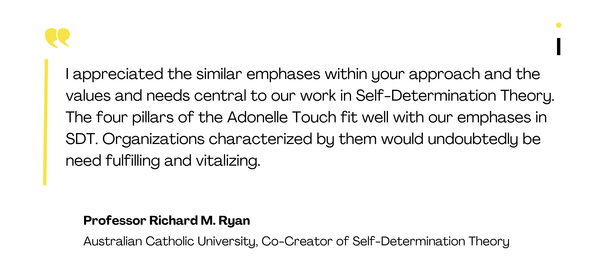
The Adonelle Touch framework looks at emotional safety through four values: Inclusivity, Consent, Openness, and Empowerment.
These values are drawn from sex-positive ethics, but their relevance reaches far beyond sexuality. They offer a practical way to examine how trust is created, damaged, and strengthened in organisational life.
Inclusivity asks who feels seen, welcome, and considered. A brand may intend to be inclusive, but its imagery, assumptions, language, product design, or customer journey may still quietly signal who belongs and who does not.
Consent asks whether people feel free to choose. In business, consent is not only a legal checkbox or procedural safeguard. It is a living, relational practice. It is created through clarity, transparency, honest invitations, meaningful options, and the absence of pressure.
Openness asks whether communication feels honest and real. It is not only about disclosing information. It is also about sincerity of tone, empathy in listening, and the willingness to show what is real, even when it is imperfect. Openness allows truth to feel safe.
Empowerment asks whether people leave the interaction feeling more capable, respected, and free. A brand can inform people, guide them, and sell to them without making them feel dependent, confused, or diminished.
Together, these values create a useful diagnostic lens. They help reveal whether a brand experience feels trustworthy, respectful, and human, or whether it creates invisible friction.
Why Emotional Safety Affects Performance
Emotionally unsafe brands may still perform.
They may still get clicks, drive conversions, and produce short-term revenue. But over time, emotional risk weakens the deeper assets that make a brand resilient. It weakens trust, reduces referrals, damages retention, lowers customer confidence, reduces people’s willingness to share honest information, and makes them more cautious, more defensive, and less loyal.
This is especially important in industries where decisions are sensitive, personal, expensive, intimate, risky, or identity-related.
Finance. Health. Wellness. Education. Dating. Sexual wellness. Therapy. Technology. Leadership. Lifestyle. Any field where people bring vulnerability, uncertainty, desire, fear, or hope into the interaction.
In these spaces, people are not only buying a product. They are deciding whether they can trust the organisation with some part of their life.
That is why emotional safety is not separate from performance. It is one of the conditions that makes sustainable performance possible.
A Simple Diagnostic Question
A useful starting point is this:
Where might our brand create hesitation, pressure, confusion, shame, or distrust, even if that was never our intention?
That question can be applied across the whole experience:
- homepage
- sales pages
- onboarding
- pricing
- forms
- emails
- advertising
- customer support
- cancellation flows
- community guidelines
- internal culture
- leadership communication
Often, the problem is not that a company lacks values. The problem is that the values are not felt consistently.
A brand may value openness, but hide important information too late in the journey. It may value empowerment, but design choices that make people dependent. It may value consent, but use pressure-based sales tactics. It may value inclusivity, but fail to notice who the experience quietly excludes.
Emotional safety is created when values are not only stated, but designed into interaction.
The Brands People Return To
The brands people return to are not always the loudest, fastest, or most persuasive. Often, they are the brands people feel good about choosing.
They make people feel respected, make decisions easier, reduce anxiety, communicate clearly, honour boundaries, and help people feel more confident.
This does not make them weak, rather it makes them trustworthy.
A brand that feels emotionally safe can still be bold, desirable, ambitious, and commercially strong. Emotional safety does not remove energy from a brand. It gives that energy a more trustworthy foundation.
Because people do not only remember what a brand looked like. They remember how it felt to be in a relationship with it.
Adonelle works with organisations to identify where brand communication and customer experience create trust, friction, or emotional risk, and how those experiences can become clearer, more respectful, and more human.